We just wrapped a project that taught us more about dimensional design than any event activation we've done before.
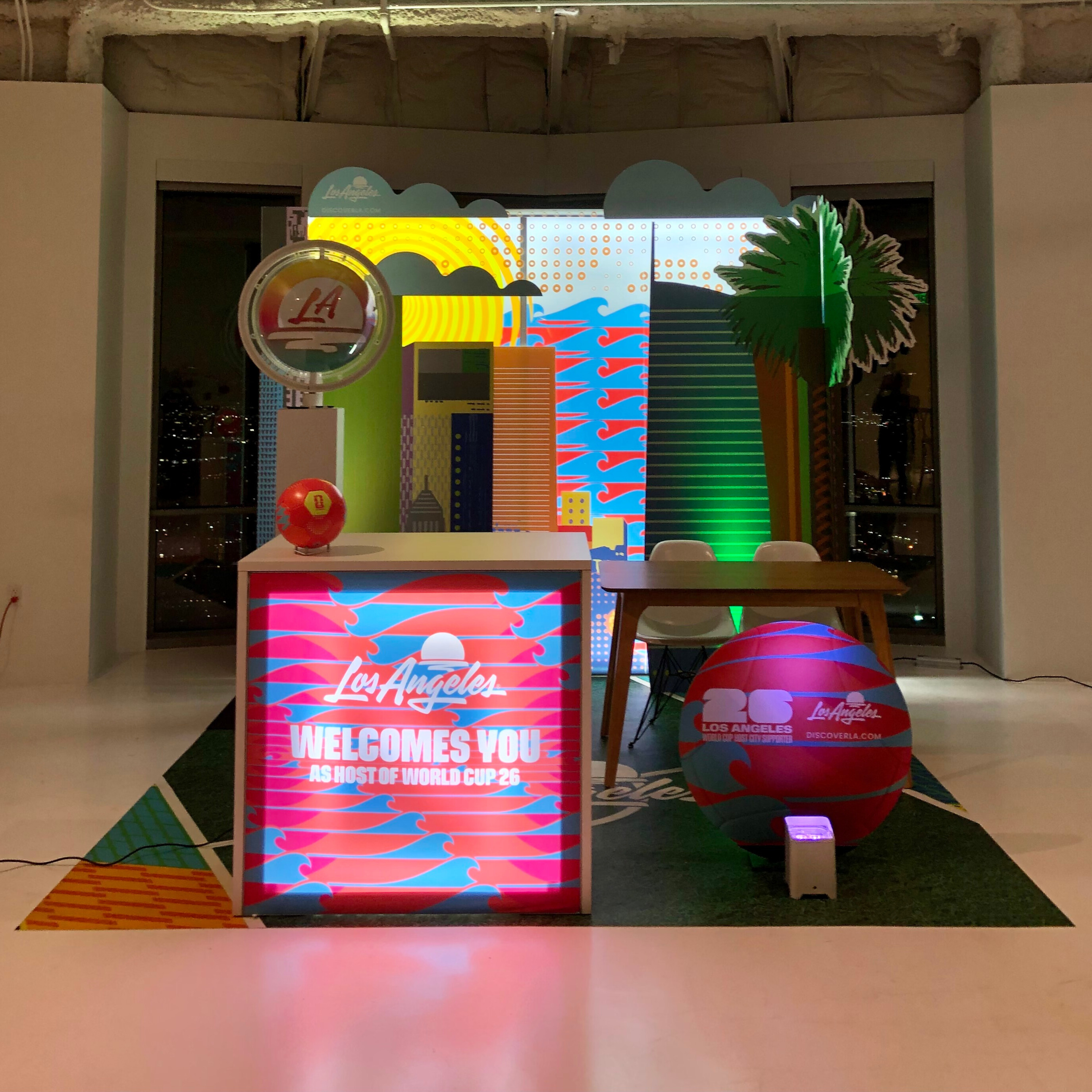
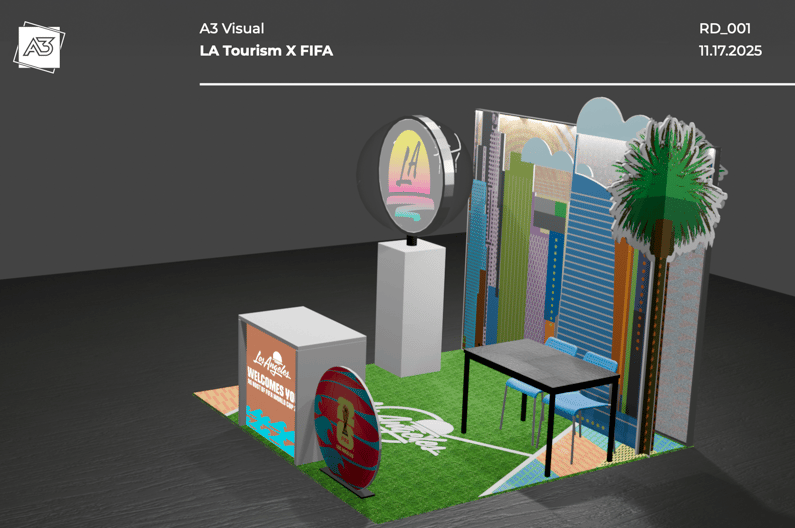
LA Tourism needed a booth for the FIFA World Cup Watch Party. The space? 10x10 feet. The goal? Capture the energy of an entire city while people walked past at event speed.
Here's what we discovered when brand guidelines met physical space constraints.
The Real Challenge Nobody Talks About
You can print anything on a flat surface. That part is easy.
The hard part is making brand patterns work when they wrap around corners, stack in layers, and need to look intentional from every angle a visitor might approach.
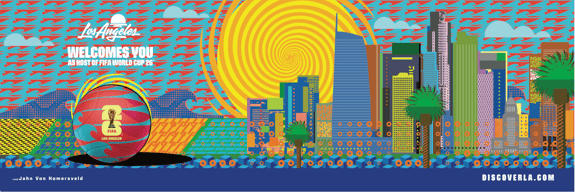
We pulled inspiration from LA Tourism's past activations and their established color palette. Then we faced the actual problem: how do you create depth in 100 square feet?
.
Three Design Decisions That Mattered
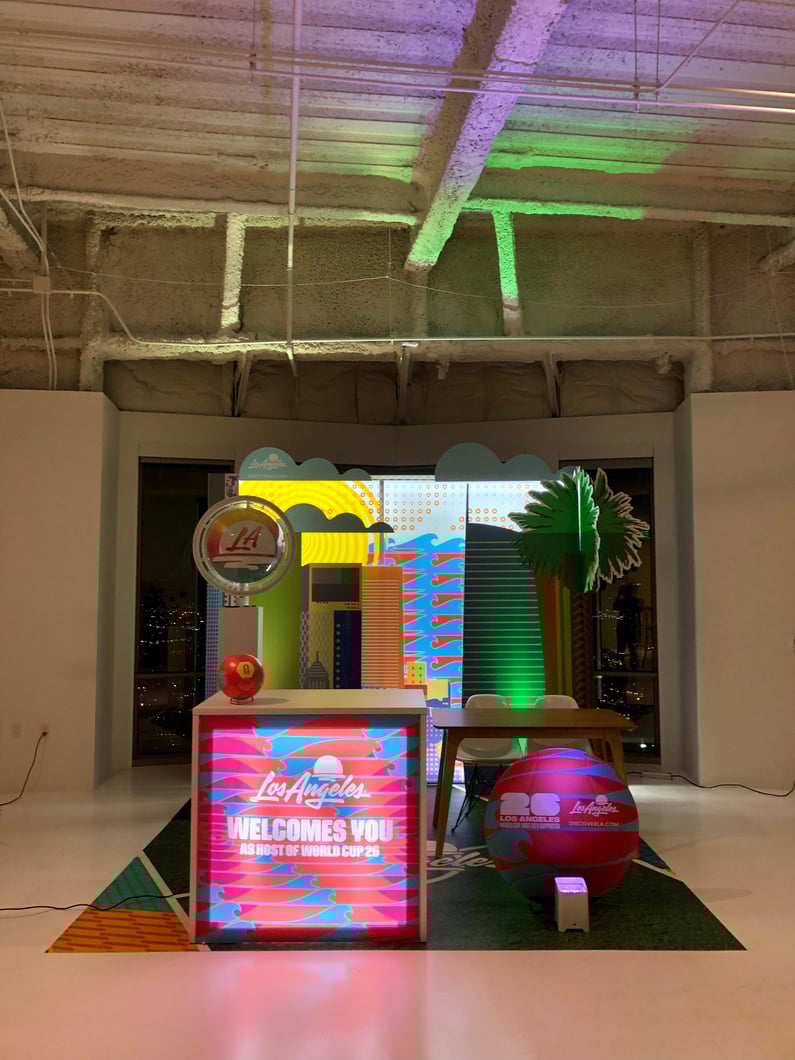
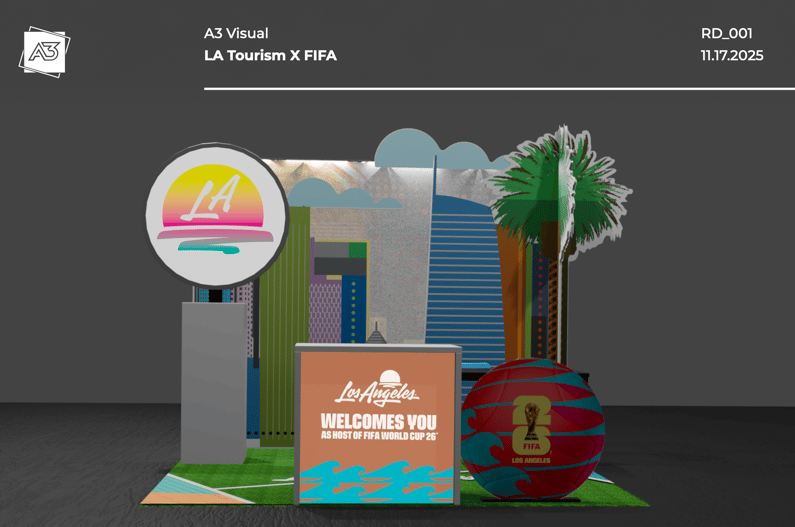
Layered elements instead of flat walls. We built depth through a printed fabric back layer, then added a plexiglass print decal on the front to create dimensional separation. Gatorboard cutouts—including a palm tree standee—added shadow lines and visual interest. A single flat graphic reads like a poster. Multiple planes at different depths read like an environment.
Backlit components for visibility. Event spaces are crowded and loud. We ran LED lighting around the inside perimeter, creating backlighting that cut through the visual noise without requiring more square footage. The light draws eyes before people consciously decide to look.
Floor graphics that anchor the space. Most booths ignore the floor. We printed a 10x10 floor graphic that tied into the World Cup theme and visually expanded the footprint. Combined with a custom front counter featuring the soccer ball logo, it signals where the experience starts before visitors step inside.
The Technical Details That Made It Work
Modular aluminum frames let us install fast and keep clean lines. No visible hardware means the design stays front and center.
Color accuracy mattered more than we expected. When you're representing a city's brand at a global event, the blues and golds need to match exactly. We ran test prints and adjusted until the output matched the brand guide under event lighting.
Gatorboard gave us dimensional stability without adding weight. The standees needed to survive setup, teardown, and potential bumps from crowds.
What This Means for Compact Event Spaces
We used to think small booths were limitations. Now we see them as exercises in intentional design.
We learned to make every element earn its place. The skyline. The surf culture references. The sports energy. Each piece had to communicate LA's identity without explanation.
The collaboration between destination marketing and sports culture worked because we focused on immersive experience over information density. People remember how a space made them feel more than what the signs said.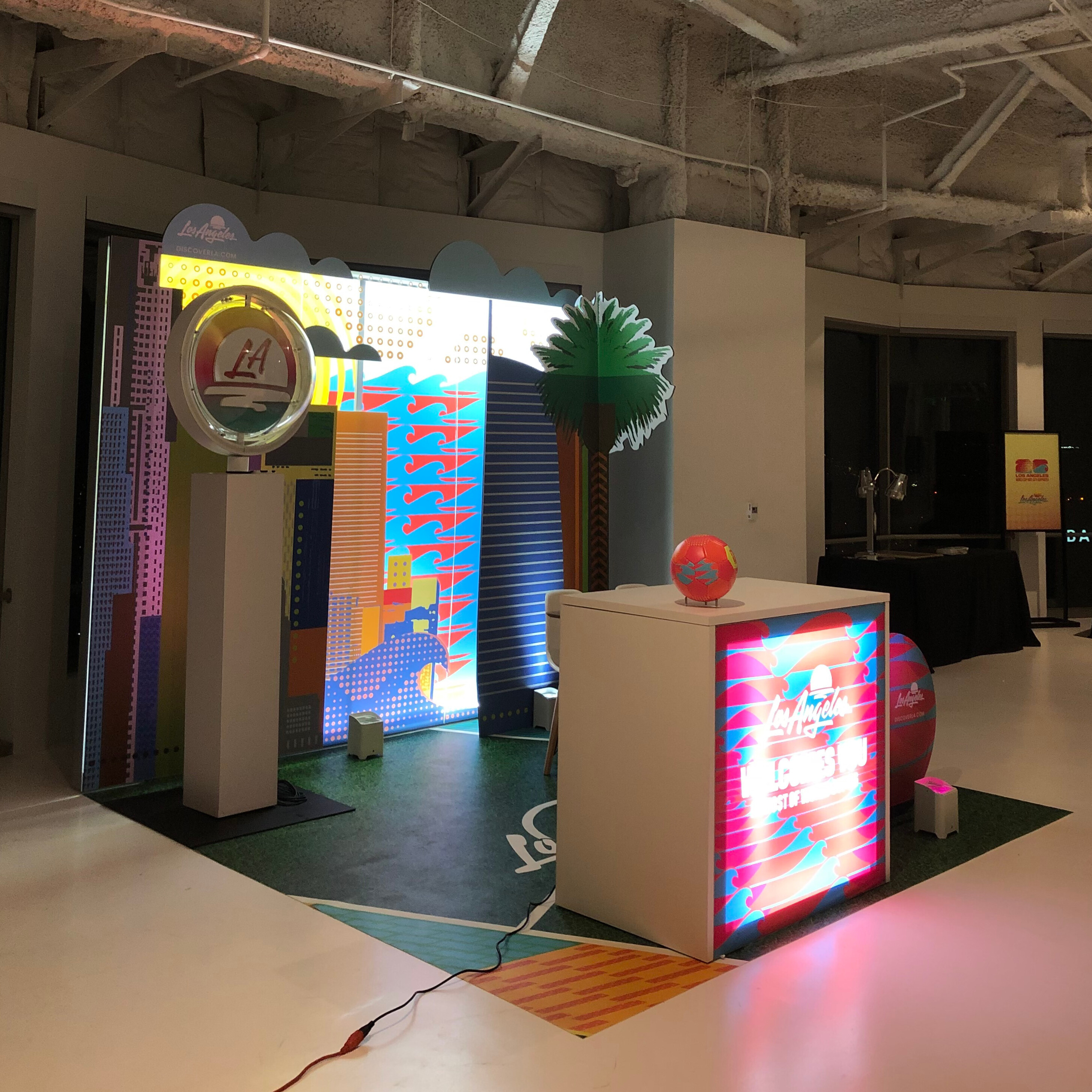
The Bigger Pattern We're Seeing
Brands are moving away from static displays toward environments that tell stories in three dimensions.
This project showed us that the future of event design lives in the details. How materials catch light. How layers create movement. How a 10x10 space can feel bigger when you design for the experience instead of the measurements.
We're carrying these lessons into every booth design now. Physical space has rules, but those rules create better work when you understand them.